Hanoi rural communities turn culture into tourism experiences
Vietnam buffalo tours - Community-based tourism opens up a new direction in preserving and promoting local cultural values in Hanoi, as people directly participate in organizing tourism activities, creating livelihoods, and benefiting from the cultural values and landscapes of their homeland. From Muong Coc and Bat Trang to Duong Lam, these models show that when the community becomes the main actors, tourism can create additional resources for heritage to continue to be preserved and passed on.
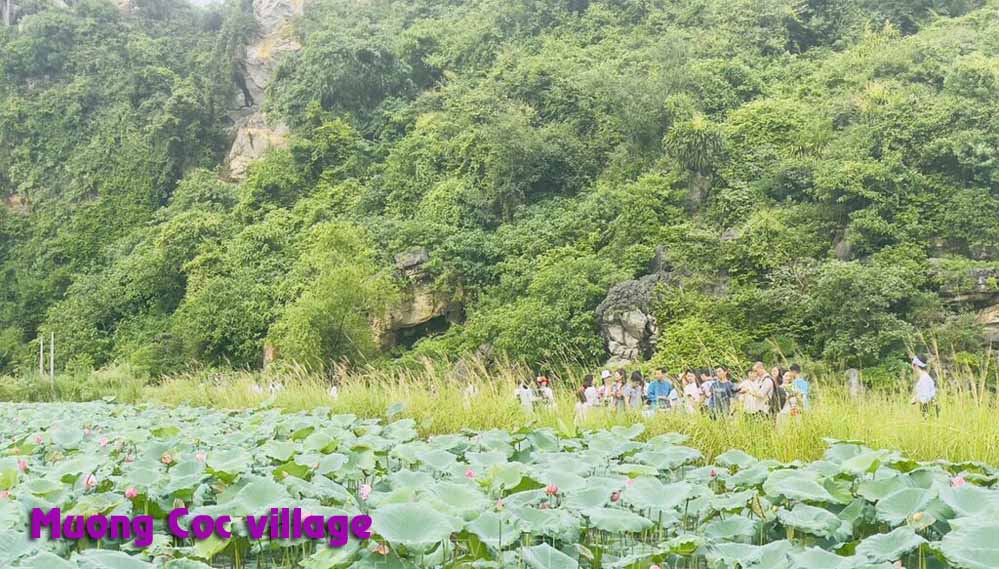
Located approximately 60 km from the center of Hanoi, Muong Coc village in My Duc commune offers a semi-mountainous landscape featuring Bai Bo Lake, rice paddies, lotus ponds, limestone mountains, and the villages of the Muong ethnic group. Building upon the inherent values of the landscape and local life, a community-based tourism model is emerging, bringing visitors closer to the local nature, culture, and people.
In Muong Coc, visitors can choose a slow-paced journey to "touch the peace." They can stroll through rice paddies and lotus ponds, admire the limestone mountains, learn about the VAC (Vietnamese acronym for garden, pond, and livestock) model at Gio Nui Farmstay, or enjoy dishes prepared in the traditional way of the Muong people. These seemingly simple activities make a trip unique, because visitors not only observe from the sidelines but also have the opportunity to directly participate in the living space of the community.
There, a meal is more than just a culinary experience. Traditional dishes, their preparation methods, presentation, and the stories behind each dish can all become part of a cultural exploration journey. Muong Coc tourism is oriented towards a community-based tourism model, with local people as the main actors, directly participating in organizing and benefiting from tourism. The locality focuses on exploiting the landscape, cultural and artistic values, festivals, and existing products to create authentic experiences for tourists.
From the story of Muong Coc, it can be seen that Hanoi's potential for community-based tourism development lies not only in well-known destinations but also in suburban areas that still preserve rural landscapes, ecological spaces, and cultural life.
According to the Asian Tourism Development Institute, the suburban areas of Hanoi possess significant tourism development potential. With their beautiful natural landscapes and fresh air, these regions are particularly suitable for ecotourism and weekend getaways. Furthermore, the system of traditional craft villages and rich local customs and traditions are attractive features, offering visitors the opportunity to learn about rural life and culture. Activities such as visiting farms, experiencing agricultural work, or participating in local festivals have become unique highlights, attracting an increasing number of tourists.
Along with Muong Coc, Hanoi has many cultural spaces that develop tourism based on the values preserved by the community. In Bat Trang pottery village, traditional crafts are connected with sightseeing and experiential activities. Tourists can not only learn about the history of the village and admire pottery products but also directly participate in the production process. Through this, traditional crafts are brought closer to the public, especially the younger generation.
Meanwhile, the ancient village of Duong Lam offers a different story about the relationship between heritage preservation and the lives of its inhabitants. The ancient houses, village roads, landscapes, cuisine, and traditional lifestyle do not exist in isolation but are intertwined with the lives of the people. It is this very lifestyle that creates the unique appeal of the destination, while simultaneously highlighting the need for harmony between preserving the heritage space and developing tourism.
Ultimately, community tourism is not just about bringing tourists to villages, hamlets, or traditional cultural spaces. At its core, this model is the genuine participation of the community.
However, for community tourism to develop, cultural preservation alone is not enough. Communities need the conditions to participate genuinely, from organizing activities and providing services to benefiting from revenue. At the same time, factors such as accommodation, environment, transportation, service skills, and investment mechanisms also need to be gradually improved.
Transportation infrastructure, electricity and water supply, and essential services for tourists need to be improved. At the same time, local people should be trained in tourism skills.
These are also the issues being raised in Muong Coc, the current difficulty lies in developing a homestay system that both reflects the community's identity and meets the requirements for quality service. To address this, the locality will strengthen efforts to attract businesses to invest, while gradually resolving issues related to mechanisms, land, and the environment.
An effective community-based tourism model should not only be measured by the number of tourists or revenue, but also by its ability to sustain livelihoods, protect the environment, preserve identity, and transmit culture to future generations. More importantly, local people must be involved in the decision-making process on how to exploit the values of their own community.
From a business perspective, the resources of tourism in Hanoi's suburbs are not just fields, villages, or landscapes, but also the people and cultural life existing within those spaces. The challenge is how to transform these values into professional products without losing their authenticity. When the government creates favorable conditions, businesses connect with the market, and people truly benefit, tourism will become a new driving force for the rural economy.
Hanoi has ample potential for developing community-based tourism thanks to its system of ancient villages, traditional craft villages, rich traditional cultural spaces, and rural landscapes. When people can create livelihoods from the cultural values of their homeland, tourism not only brings visitors to heritage sites but also creates additional resources for the community to preserve, practice, and transmit those values. This forms the foundation for community-based tourism to become a bridge between heritage preservation, livelihood development, and the preservation of cultural identity.


Comments
Post a Comment